Engineering question
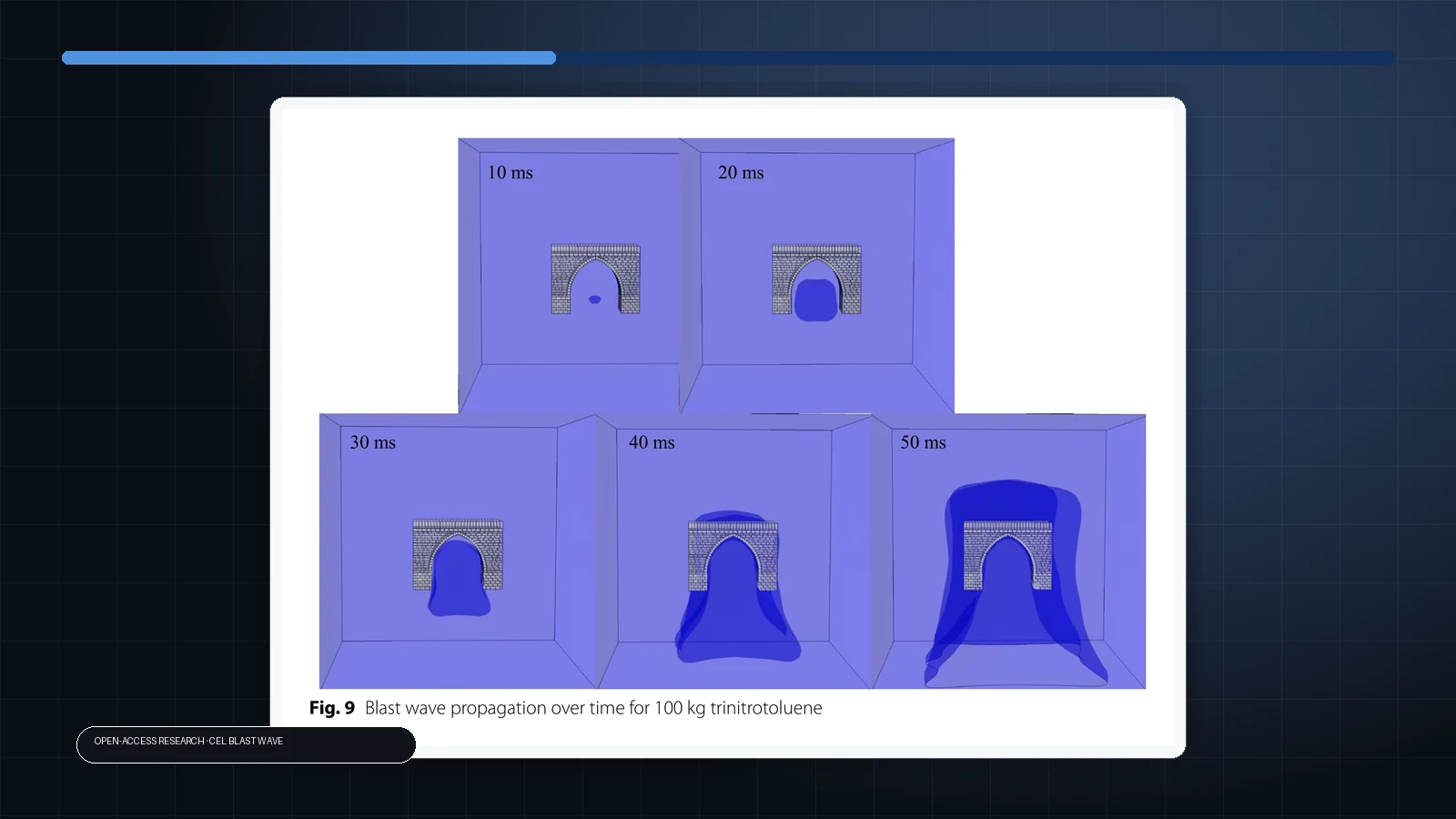
CFRP-strengthened masonry arch bridge under close-range blast
How does a strengthening system change blast-driven damage and structural response in a vulnerable masonry bridge?
View case →Case studies
These research-backed studies demonstrate the type of modelling logic, verification discipline and engineering interpretation Axis brings to project work. Commercial work can remain confidential or be presented anonymously with permission.
How does a strengthening system change blast-driven damage and structural response in a vulnerable masonry bridge?
View case →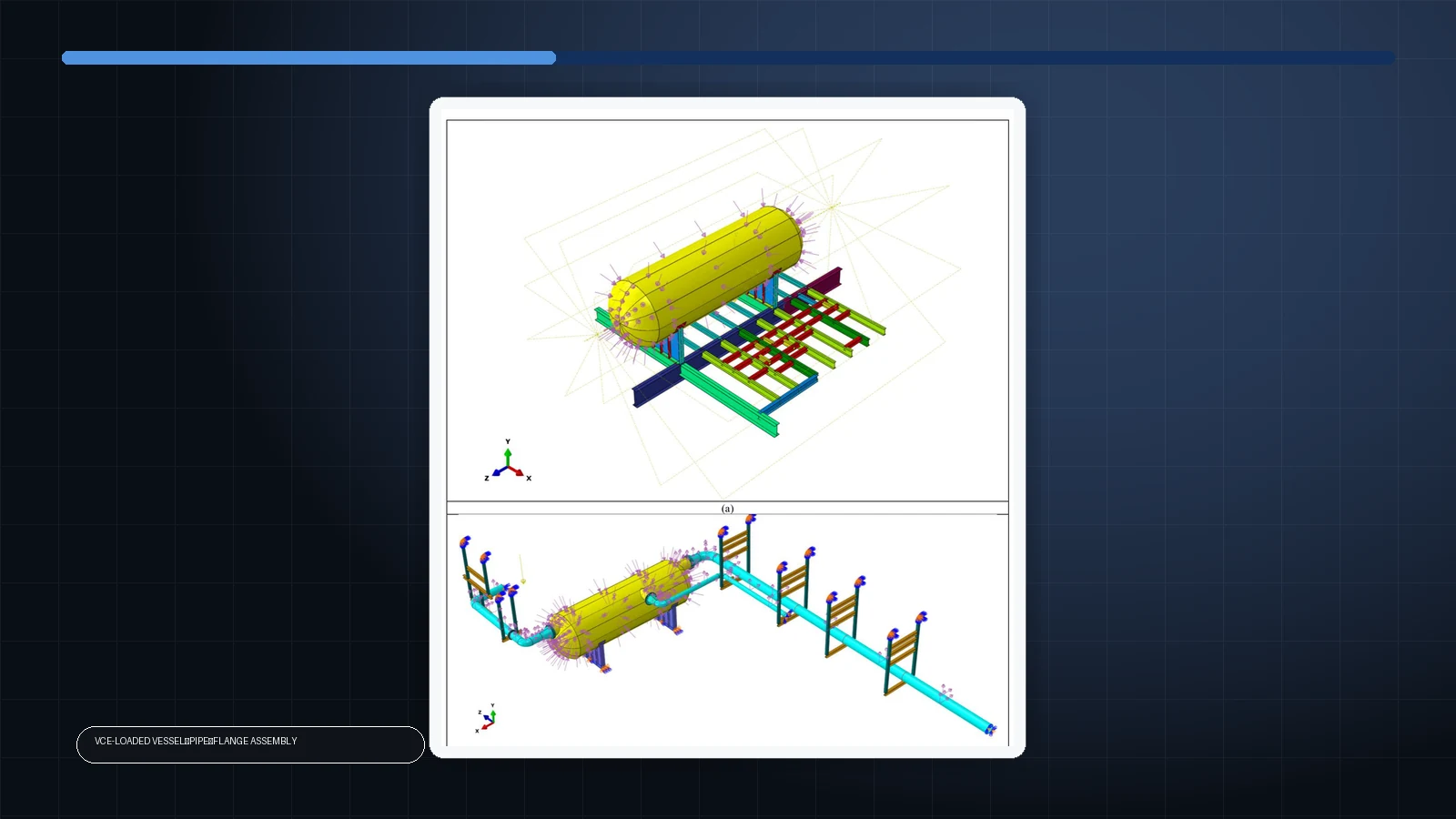
Which parts of a connected industrial system become structurally vulnerable under vapor-cloud-explosion loading?
View case →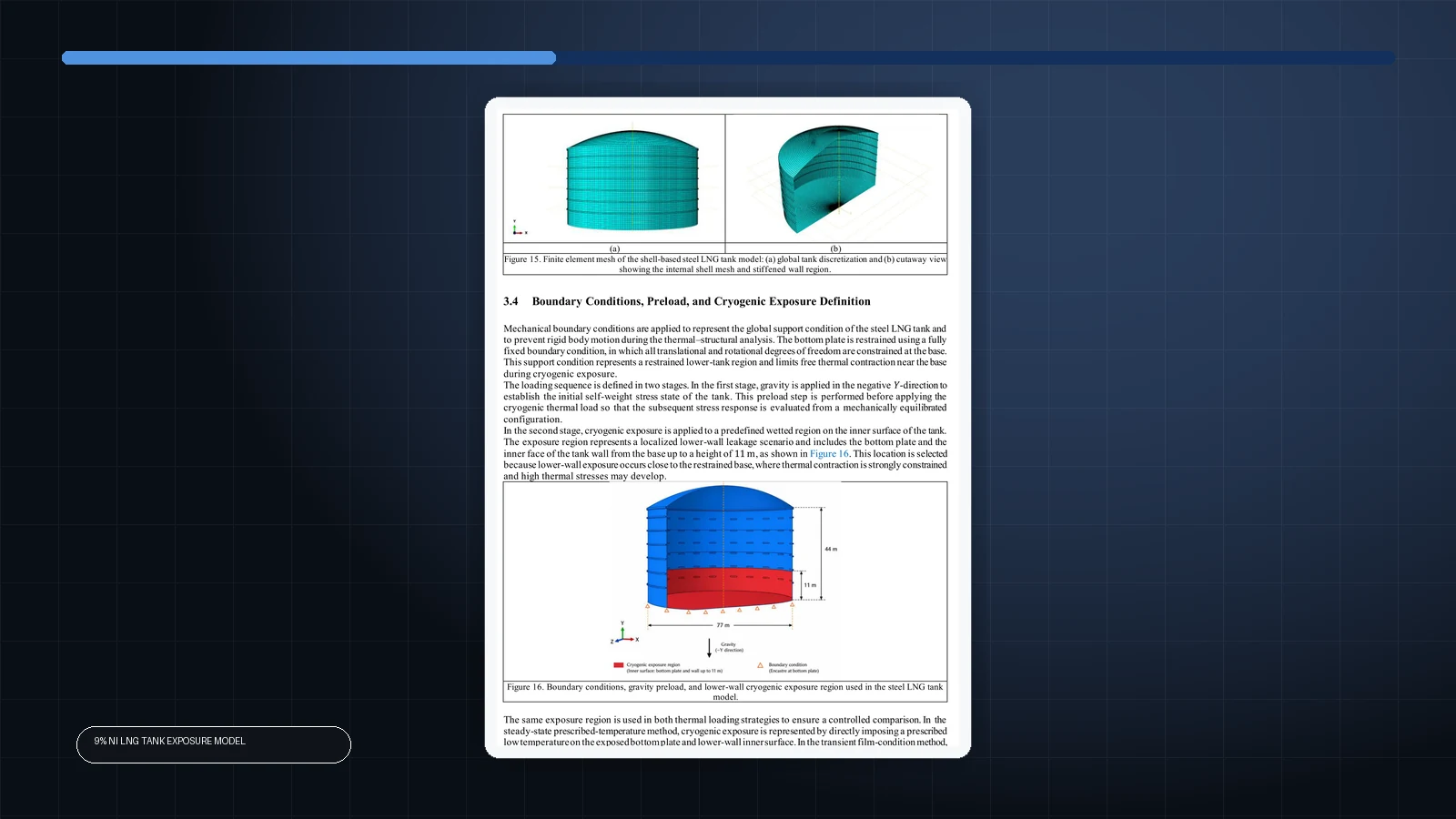
How do transient cooling history, thermal gradients and restraint shift the location and timing of critical structural stress?
View case →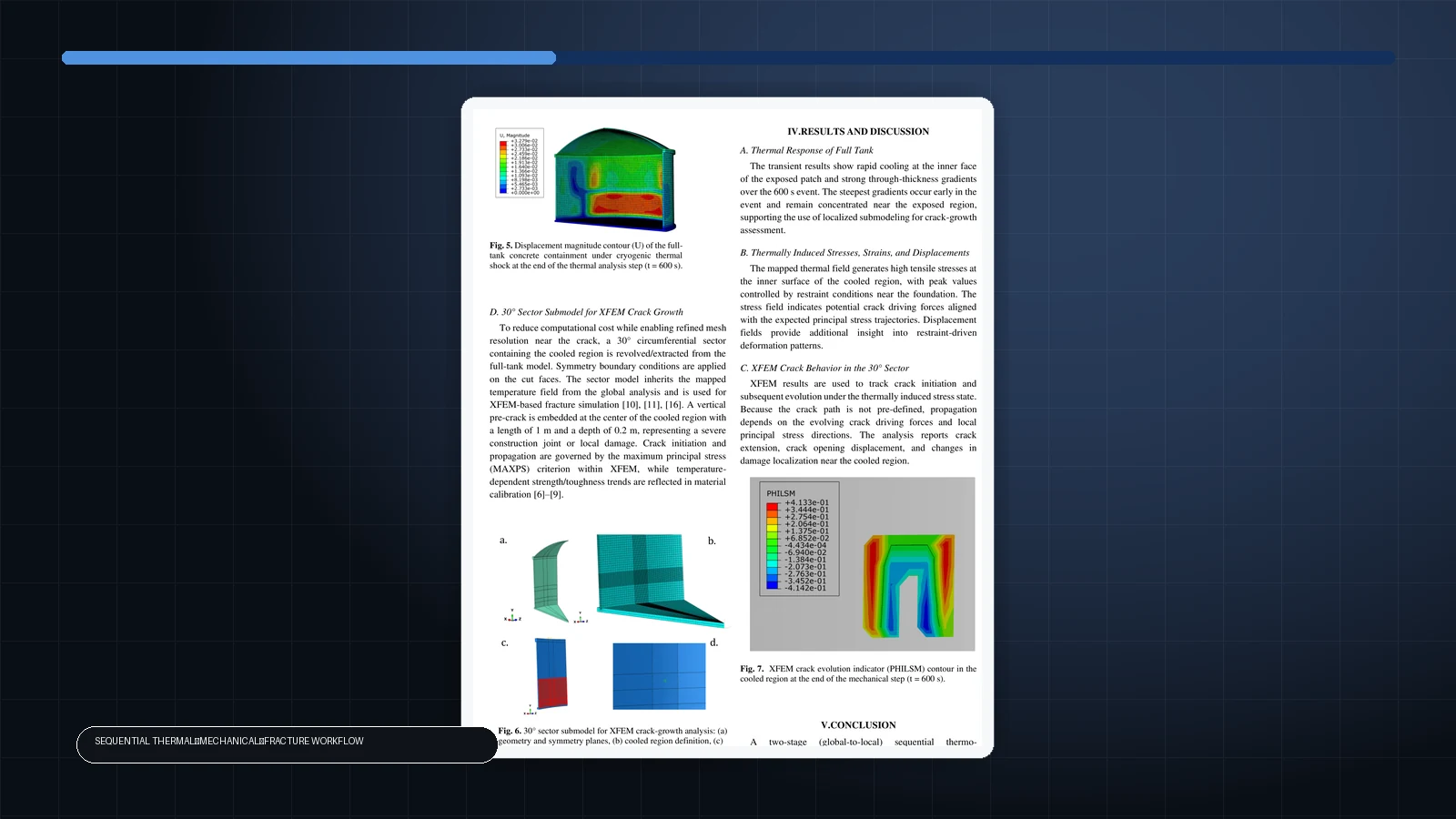
How can localized cryogenic thermal shock reactivate or propagate pre-existing cracking in an outer containment system?
View case →Your project
What matters is the underlying physics, modelling method and engineering decision. Send the problem and we will identify the relevant analysis route.